Greenstriped Mapleworms
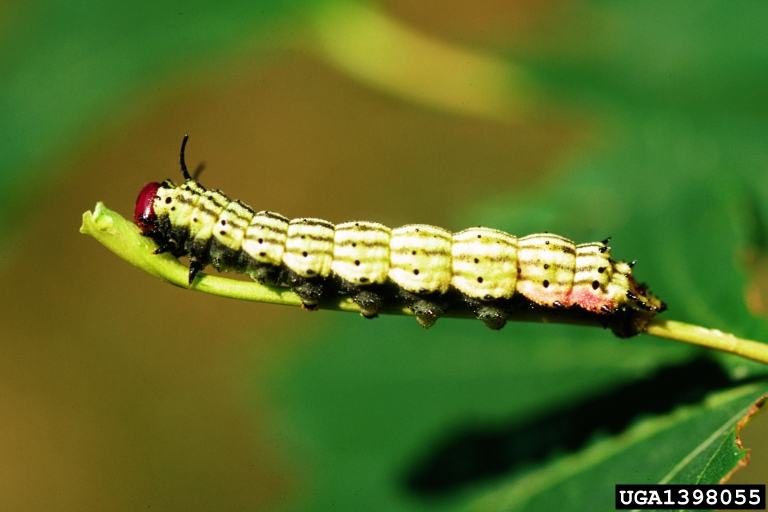
Greenstriped mapleworms are found in the piedmont at the end of June and early July. The caterpillar has a red or black head, a pale green body, and seven dark green lines running the length of the body. Full-grown larvae can reach 40 mm long, As their name suggests, their preferred hosts are maple trees, but they are also found on boxelder and various oaks, especially those near maples.
In the South, adult rosy maplemoths emerged from their pupae in late April or early May.
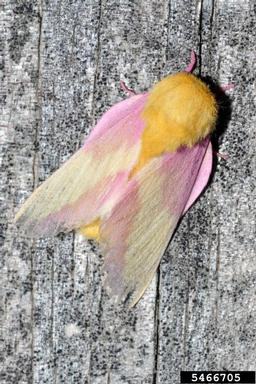
The moth's body is yellow on top and pink on the bottom with various designs of yellow and pink on the wings. Adult moths can have a wingspan of 37 to 50 mm.
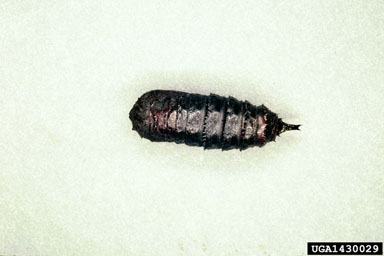
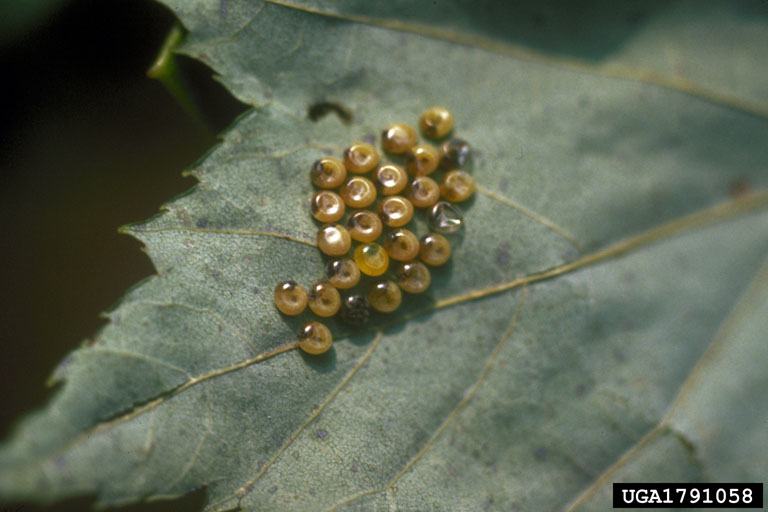
Adult mapleworms lay eggs on the underside of leaves on the outer edge of the tree canopy from May to June. The eggs hatch as caterpillars in 10 days and begin feeding on leaves. It takes about one month for a larva to fully develop, at which point it will crawl to the ground to pupate. In the Southern U.S., adults will emerge as moths in about two weeks and begin the second generation of the year. Mapleworms overwinter as pupae in the soil, typically under its host maple tree.
Rarely will the tree suffer long-term damage, but some loss in growth and branch dieback may occur.
Thanks to NCSU Extension Entomologist Steve Frank for sharing this information.
Image courtesy of Bugwood