The Eastern Swallowtail Butterfly, Papilio glaucous, was designated as the official North Carolina State Butterfly in 2012. As one of our largest and most distinctive butterflies, it lives and breeds in all 100 counties, producing several generations per season, and is common in both urban and rural settings. Tiger swallowtails get their name from the tail-like extensions on each hind wing and distinctive black stripes dissecting a yellow background along the forewings. Females of this species are dimorphic, with individuals exhibiting either the yellow background described, or an alternate phase in which the black stripes are obscured by a dark background. In either form, females exhibit a row of shimmering blue spots spanning the width of each hindwing, bordered on each side by orange spots to round out the beautiful spectacle of our state butterfly.
Our State Butterfly Needs Native Trees!
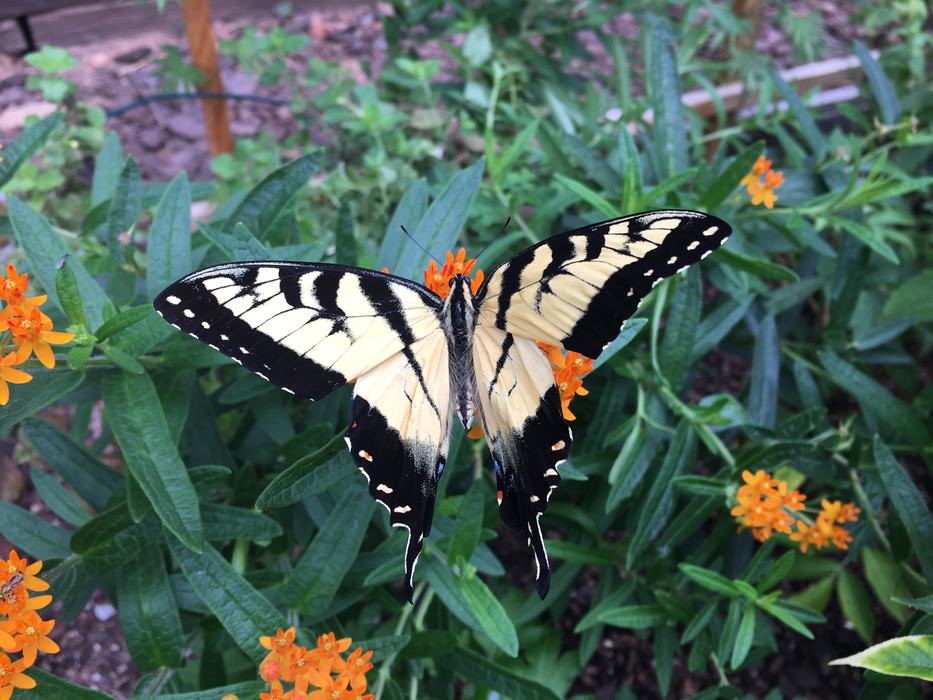
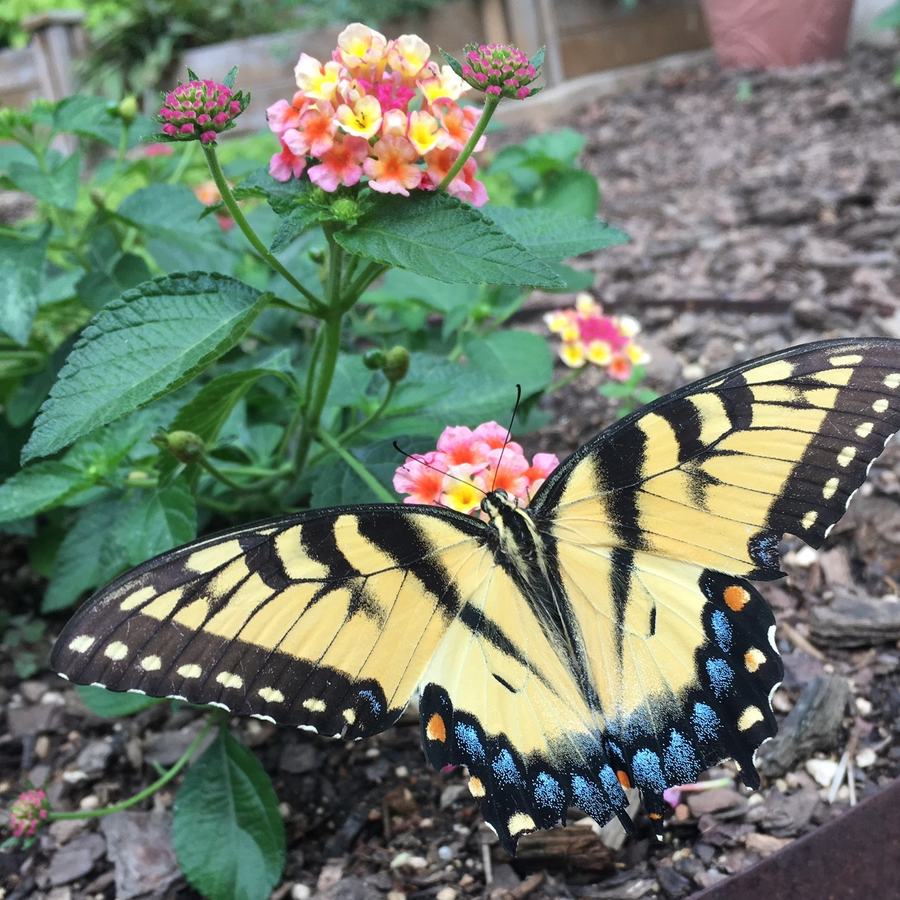
Tiger swallowtails feed on a wide range of nectar-producing flowers, so bright blooms and sunny spaces are usually all that’s required to lure them to the home garden. But it requires more than a flower garden to produce a tiger swallowtail paradise. Like all butterflies, tiger swallowtails require “host” plants for egg-laying in order to meet the food preference of emerging caterpillars. Some species of butterflies are able to take advantage of both feeding and host plant opportunities within the confines of the same plant. Monarchs, for example, can sip on the nectar of native milkweeds, and then dip below to lay eggs on the underside of leaves. The black swallowtail, a close relative of the tiger swallowtail, can flit over to the herb garden and deposit eggs on parsley, dill, or fennel. But tiger swallowtails require native trees. Common egg-laying sites are found among the leaves of black cherry (Prunus serotina) and tulip tree (Liriodendron tulipifera), with white ash (Fraxinus americana), ironwood (Carpinus caroliniana), sweet bay magnolia (Magnolia virginiana), and members of the willow family (Salix sp.) rounding out the list. Swallowtail caterpillars seldom feed on trees in large enough proportions to be considered a pest, and the host tree often serves double duty as an anchor for the well-camouflaged chrysalis during the next stage of development.
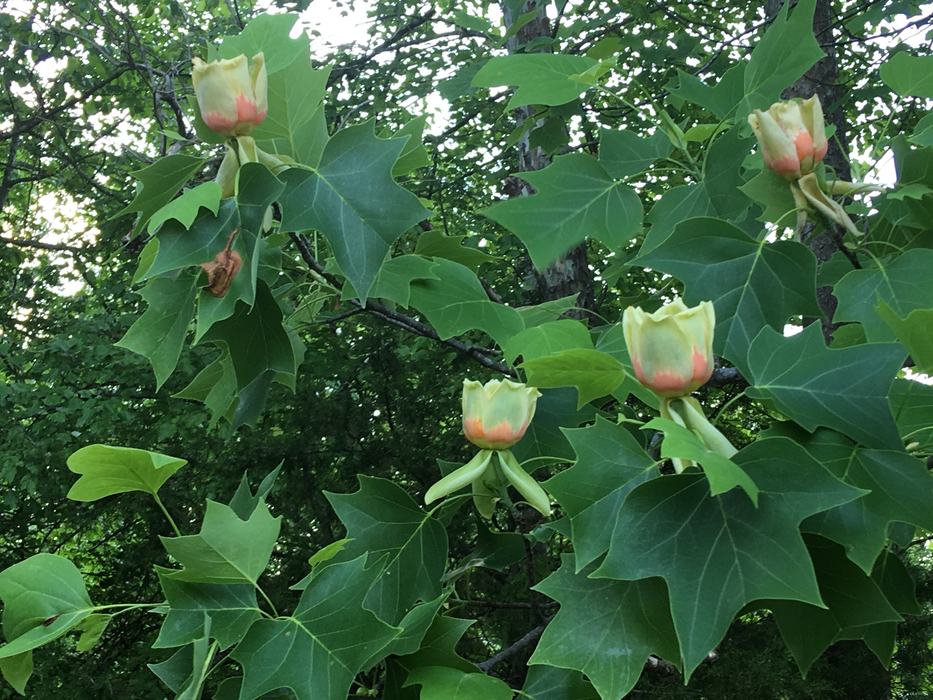
When a forest is cleared of native trees, host sites crucial for the survival of tiger swallowtails are eliminated. The residential development that often follows is typically populated with hybrid and non-native trees that offer few benefits to native wildlife. Excluding native trees from a residential landscaping plan ignores a vital link in the chain of tiger swallowtail survival. Islands of native shade trees also provide shelter from inclement weather and protection from predators that can be utilized by all types of butterflies.
The NC State Extension publication Butterflies in Your Backyard indicates that some native trees, such as tulip tree, black cherry, and some of the willows, can be pruned and kept at a shrub size for small yards by cutting them to the ground every 2-3 years. A wealth of additional information on all types of North Carolina butterflies can be found is this booklet. Also check out Fall is the Best Time to Plant Trees and Shrubs, by Charlotte Glen, and learn the proper methods for planting some of the native trees that are necessary to complete your swallowtail habitat.