From the Mountains to the Sea: the Great Southeast Pollinator Census is a success in 2025
(Updated: Feb. 24, 2026, 3:49 p.m.)
Across the hills of Transylvania County, the urban gardens of Wake and Durham, and the coastal fields of Currituck, North Carolinians spent a weekend in August doing something remarkable: they stopped to look.
The 2025 Great Southeast Pollinator Census (GSEPC) wasn't just about the numbers—though the numbers were historic—it was about a statewide increase in entomological literacy. Thousands of community scientists across 92 of North Carolina’s 100 counties discovered that a garden is more than just plants: it is a complex, buzzing ecosystem.
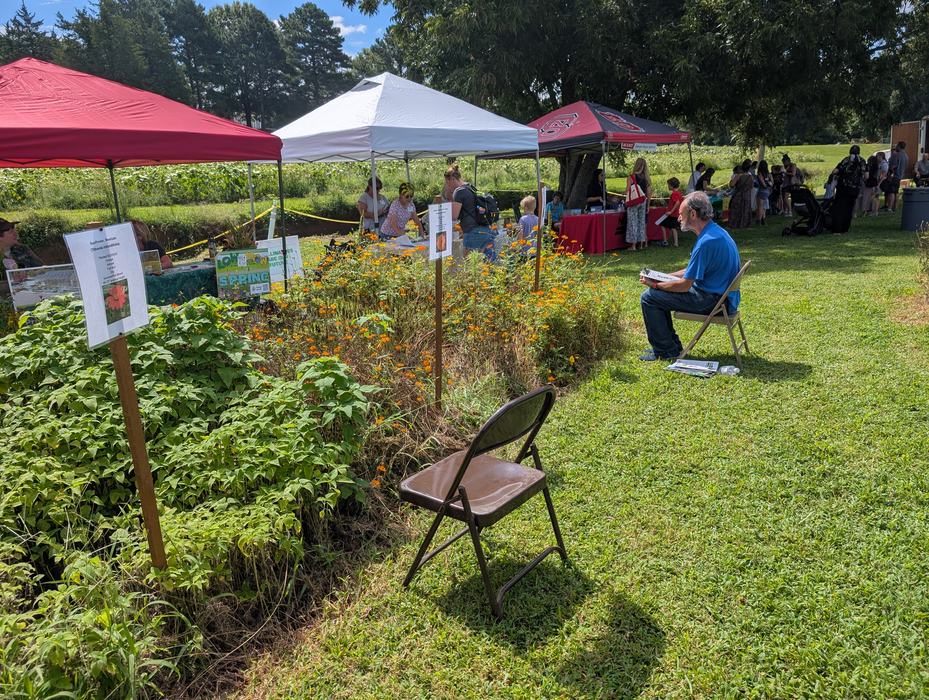
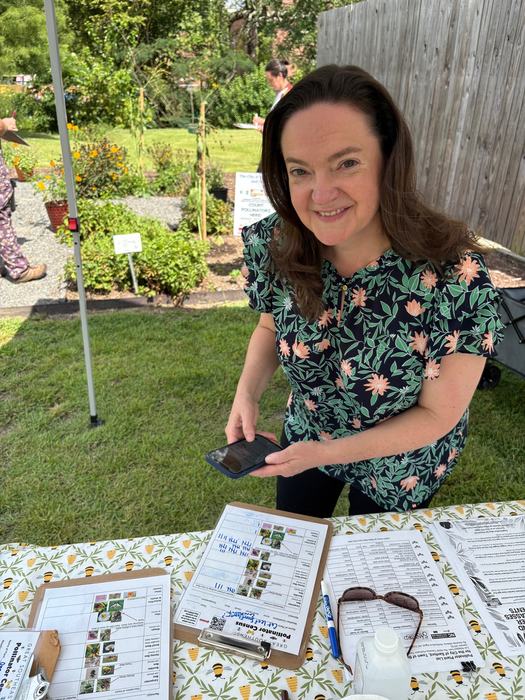
Community scientists take a moment to count pollinators for the Great Southeast Pollinator Census at the State Farmers Market. The NC Department of Agriculture and Consumer Services planted pollinator habitat next to the farmers market. Photo by Amanda Bratcher
A Positive Triple-Threat for Conservation
The GSEPC is built on three essential goals that are transforming North Carolina’s approach to conservation:
Data Generation: With a record-breaking 5,067 counts in NC submitted in 2025 (a 113% increase over last year), a robust dataset is growing to help researchers track pollinator health and population trends across the Southeast.
Sustainable Pollinator Habitat: The Census encourages participants to look at their land differently. This year’s success has inspired a surge in the planting of native milkweed, goldenrod, and asters, creating a "pollinator corridor" across the state. More than 160 new pollinator gardens were created across the state, too.
Entomological Awareness and Literacy: By engaging public schools, homeschool groups, and families, the project is fostering a new generation of North Carolinians who understand that insects are the foundation of North Carolina’s $100 billion agriculture industry.
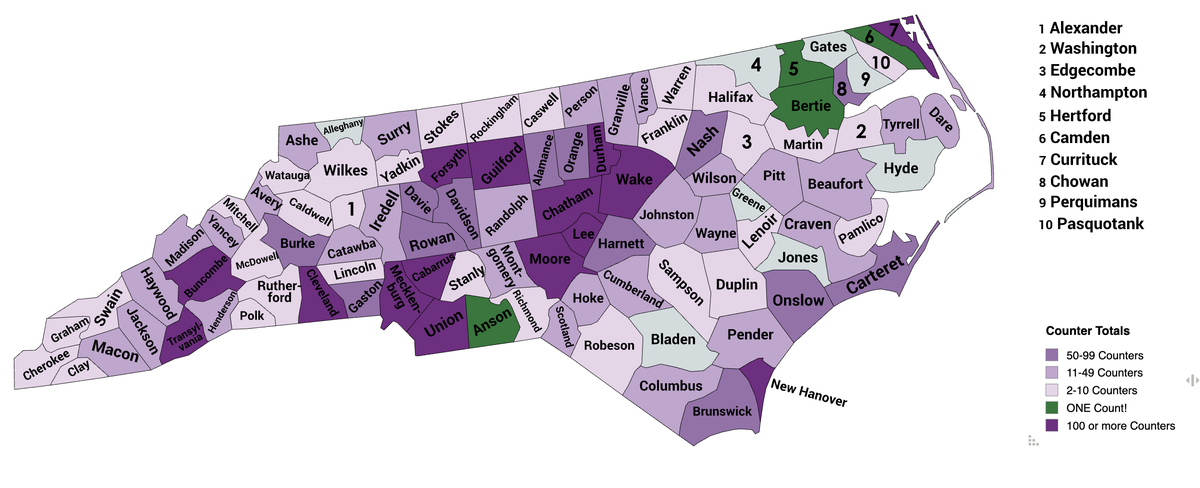
A map of North Carolina graphing the number of counters in each county, where the darkest purple indicates the most counters and green indicates one counter. Graphic developed by Amanda Bratcher, using data from the 2025 Great Southeast Pollinator Census, using Mapchart.net
A Statewide Celebration
The growth is staggering! Statewide participation has jumped by 242 percent since the project first arrived in North Carolina in 2023. From the 59 "consistent counties" that have participated every year to the eleven new counties that joined for the first time in 2025, the message is clear: North Carolinians care about their six-legged neighbors. Of the five states participating, North Carolina ranks third, behind Georgia, where the program originated, and Florida, by a narrow margin.
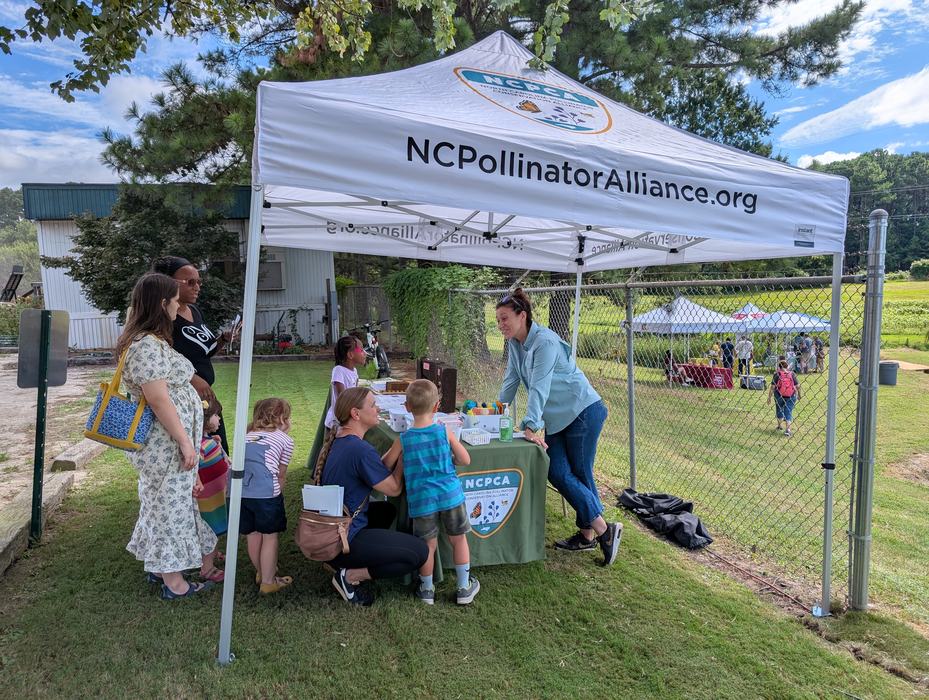
The Pollinator Field Day event was held on Friday, August 22, by the NC Pollinator Conservation Alliance and was supported by more than 10 member organizations, including the Extension Master Gardener Volunteers of Wake County. Photo by Amanda Bratcher
Discoveries in the Garden
This year, the Census turned North Carolina into a massive outdoor classroom. Participants reported "lightbulb moments" that changed how they view their own backyards:
Identification Skills: Many residents learned for the first time how to distinguish a native bumble bee from a carpenter bee, or realized that many "scary" wasps are actually gentle, essential pollinators.
Insect Interactions: Counters observed "buzz pollination" in action and witnessed the predatory-prey balance between beneficial insects.
The Power of Observation: By sitting still for just 15 minutes, volunteers across the state reported a newfound appreciation for the sheer diversity of life that exists in even a small window box or community garden.
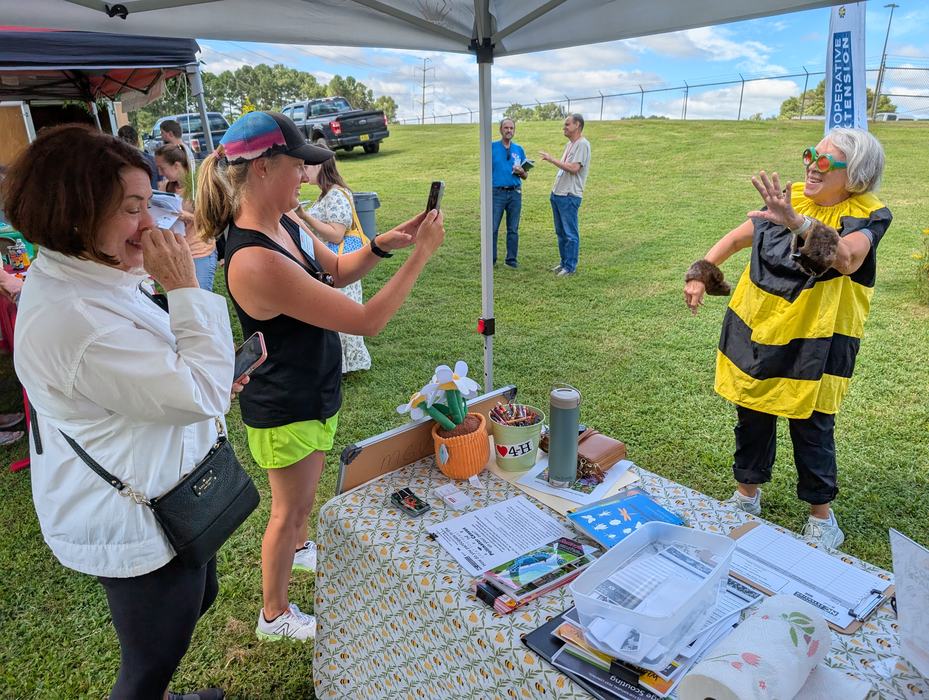
Extension Master Gardener Volunteers of Wake County take a moment to have a "pollinator break" for social media, promoting the NC Pollinator Field Day at the State Farmers Market on Friday, August 22, 2025. There were so many resources and crafts for visitors and families. Photo by Amanda Bratcher
Looking Toward 2026
The work doesn't end when the counting stops. To prepare for the next census on August 21-22, 2026, residents are encouraged to:
1) Plant more for diversity: Include plants like milkweed, goldenrods, beebalms and asters in your garden, which are crucial nectar and pollen sources for local pollinators. It doesn’t have to all be native, but working towards increasing diversity and removing invasive species are critical. You can find some great plants to add to your garden or property by checking out the NC State Extension Plant Toolbox Plant Finder tool.
2) Practice Integrated Pest and Pollinator Management and reduce chemical use: Avoid using pesticides, especially when plants are blooming and pollinators are active, as you are able!
New research has shown that mosquito sprays can be especially harmful to non-target organisms (
) and still not be effective at controlling mosquitos (
3) Provide habitat and reduce disturbance: Consider leaving a patch of bare soil or allowing a small corner of your yard to go wild; many native bees nest underground and benefit from reduced management and disturbance. The less “management” the better! If you want to build something, check out how to properly manage a bee hotel with NC State Extension Specialists (publication |
).
To view the 2025 statewide data report or find resources to improve your local habitat, visit the NC GSEPC website at https://go.ncsu.edu/gsepcinnc.
Mayor Rebecca Salmon of Sanford, NC counts pollinators for the Great Southeast Pollinator Census in the Sanford Bee City USA Pollinator Garden on August 22, 2025. The Bee City and Bee Campus USA programs are initiatives of the Xerces Society for Invertebrate Conservation. Photo by Amanda Bratcher
Top 10 Counties in 2025 (Extension Districts): Wake County (North East), Transylvania County (West), Durham County (North Central), Guilford County (North Central), Union County (South Central), Moore County (South Central), Currituck County (North East), Mecklenburg County (South Central), Cleveland County (West), and Cabarrus County (South Central)