


Bring Magic Into Your Garden With Resurrection Lily
go.ncsu.edu/readext?236315
en Español / em Português
El inglés es el idioma de control de esta página. En la medida en que haya algún conflicto entre la traducción al inglés y la traducción, el inglés prevalece.
Al hacer clic en el enlace de traducción se activa un servicio de traducción gratuito para convertir la página al español. Al igual que con cualquier traducción por Internet, la conversión no es sensible al contexto y puede que no traduzca el texto en su significado original. NC State Extension no garantiza la exactitud del texto traducido. Por favor, tenga en cuenta que algunas aplicaciones y/o servicios pueden no funcionar como se espera cuando se traducen.
Português
Inglês é o idioma de controle desta página. Na medida que haja algum conflito entre o texto original em Inglês e a tradução, o Inglês prevalece.
Ao clicar no link de tradução, um serviço gratuito de tradução será ativado para converter a página para o Português. Como em qualquer tradução pela internet, a conversão não é sensivel ao contexto e pode não ocorrer a tradução para o significado orginal. O serviço de Extensão da Carolina do Norte (NC State Extension) não garante a exatidão do texto traduzido. Por favor, observe que algumas funções ou serviços podem não funcionar como esperado após a tradução.
English
English is the controlling language of this page. To the extent there is any conflict between the English text and the translation, English controls.
Clicking on the translation link activates a free translation service to convert the page to Spanish. As with any Internet translation, the conversion is not context-sensitive and may not translate the text to its original meaning. NC State Extension does not guarantee the accuracy of the translated text. Please note that some applications and/or services may not function as expected when translated.
Collapse ▲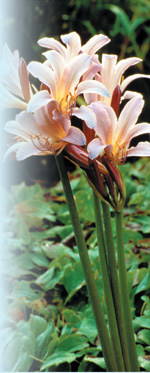
Lycoris squamigera
Photo by Robert E. Lyons
A plant that goes by the names of resurrection lily, magic lily and even the surprise lily is enough to make gardeners stop in their tracks. Those who grow this plant may know it by another, yet non-flashy, name – Lycoris squamigera.
L. squamigera is a late summer flowering bulb. The foliage emerges every spring, but then dies back by the beginning of summer. At this point, gardeners may assume it has died, but this is where the magic or the surprise lies. What actually occurs is that it goes into a brief dormancy period. After this brief dormancy, which lasts for a few weeks, two-inch flower stalks emerge from what seems like barren ground. Within four days from first emerging, these flower stalks will bear anywhere from four to seven nodding, 3-inch, rose-pink flowers.
L. squamigera is one of the preferred Lycoris species to grow due to its wide growing range. It is the most cold hardy of the Lycoris species. Not only that, but it also grows well in various soil types. This plant thrives in full sun or partial shade, though its flowers perform best in full sun. L. squamigera is attractive in borders and containers. It does well in an open woodland garden where its messy, late spring foliage is not a problem.
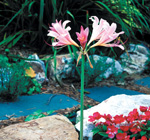
Lycoris squamigera
Photo by Robert E. Lyons
The resurrection lily is a low maintenance plant, making it a joy for gardeners. Insects and diseases pose no problems and the plant does not require a lot of watering. Due to its brief dormancy period in late summer, it does just fine in the hot weather. Plant L. squamigera bulbs about 6 inches deep in the fall. They will gradually spread over time. Neighbors will be sure to line up to get their hands on this exciting gem of a plant.
Check out this and other species in the genusLycoris at the JC Raulston Arboretum at NC State University in Raleigh. They all seem to behave similarly with that quirky transient attitude, so you have to be quick. Lycoris aurea is a lovely golden yellow and L. radiatav. radiata has striking scarlet flowers displayed like spidery clusters. Learn more at jcra.ncsu.edu.
Ben Dungan