


Witchhazel: The Gardener’s Missing (Winter) Link
go.ncsu.edu/readext?236451
en Español / em Português
El inglés es el idioma de control de esta página. En la medida en que haya algún conflicto entre la traducción al inglés y la traducción, el inglés prevalece.
Al hacer clic en el enlace de traducción se activa un servicio de traducción gratuito para convertir la página al español. Al igual que con cualquier traducción por Internet, la conversión no es sensible al contexto y puede que no traduzca el texto en su significado original. NC State Extension no garantiza la exactitud del texto traducido. Por favor, tenga en cuenta que algunas aplicaciones y/o servicios pueden no funcionar como se espera cuando se traducen.
Português
Inglês é o idioma de controle desta página. Na medida que haja algum conflito entre o texto original em Inglês e a tradução, o Inglês prevalece.
Ao clicar no link de tradução, um serviço gratuito de tradução será ativado para converter a página para o Português. Como em qualquer tradução pela internet, a conversão não é sensivel ao contexto e pode não ocorrer a tradução para o significado orginal. O serviço de Extensão da Carolina do Norte (NC State Extension) não garante a exatidão do texto traduzido. Por favor, observe que algumas funções ou serviços podem não funcionar como esperado após a tradução.
English
English is the controlling language of this page. To the extent there is any conflict between the English text and the translation, English controls.
Clicking on the translation link activates a free translation service to convert the page to Spanish. As with any Internet translation, the conversion is not context-sensitive and may not translate the text to its original meaning. NC State Extension does not guarantee the accuracy of the translated text. Please note that some applications and/or services may not function as expected when translated.
Collapse ▲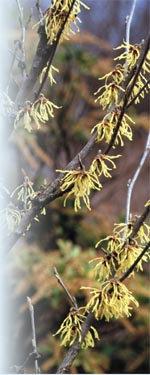
Witchhazel
While most plants are hibernating for the winter, witchhazels delight the senses with a tantalizing array of delicate, often fragrant flowers. A wonderful winter accent, this small- to medium-sized shrub complements other plantings in the landscape. Depending on the species and the named variety, witchhazels bloom from late fall through early spring. To cope with blustery weather, their flower petals curl up and then reopen on warmer, sunny days. The flowers, which have thread-like petals somewhat akin to bee balm, vary in color from tinges of yellow to red to orange.
The leaves resemble hazelnut and the fruit provide further winter interest. They are upright, loosely branched shrubs or small trees and need room to branch out — 10-15 feet in height and width. Pruning is not necessary except for infrequent shaping.
If you prefer natives, Hamamelis virginiana, which blooms in the fall, and Hamamelis vernalis, which blooms in late winter, are available. Hybrid cultivars such as ‘Arnold Promise’, ‘Ruby Glow’ and ‘Primavera’ are best for consistent flowering, scent and fall color.
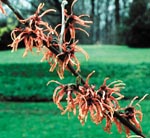
Witchhazel
The edge of a natural area or a mixed shrub border with improved soil, good drainage and occasional irrigation is ideal for these plants. They look most attractive when used to heighten areas of a garden that already are inviting. They’re perfect for established landscapes, especially historic homes and gardens.
The witchhazels in the JC Raulston Arboretum Winter Garden and in other areas of the east JCRA will surprise you with their incredible ornamental displays at the most unexpected times. You can see a dazzling cultivar array of native species, study cultivars from the Chinese species, H. mollis, and even smile at the weeping form, ‘Lombart’s Weeping’. Search the JCRA accessions database at jcra.ncsu.edu for a complete listing by clicking on “Horticulture” then “Current Plantings.”
John MacNair