


Add Touch of Nostalgia With Spireas
go.ncsu.edu/readext?236340
en Español / em Português
El inglés es el idioma de control de esta página. En la medida en que haya algún conflicto entre la traducción al inglés y la traducción, el inglés prevalece.
Al hacer clic en el enlace de traducción se activa un servicio de traducción gratuito para convertir la página al español. Al igual que con cualquier traducción por Internet, la conversión no es sensible al contexto y puede que no traduzca el texto en su significado original. NC State Extension no garantiza la exactitud del texto traducido. Por favor, tenga en cuenta que algunas aplicaciones y/o servicios pueden no funcionar como se espera cuando se traducen.
Português
Inglês é o idioma de controle desta página. Na medida que haja algum conflito entre o texto original em Inglês e a tradução, o Inglês prevalece.
Ao clicar no link de tradução, um serviço gratuito de tradução será ativado para converter a página para o Português. Como em qualquer tradução pela internet, a conversão não é sensivel ao contexto e pode não ocorrer a tradução para o significado orginal. O serviço de Extensão da Carolina do Norte (NC State Extension) não garante a exatidão do texto traduzido. Por favor, observe que algumas funções ou serviços podem não funcionar como esperado após a tradução.
English
English is the controlling language of this page. To the extent there is any conflict between the English text and the translation, English controls.
Clicking on the translation link activates a free translation service to convert the page to Spanish. As with any Internet translation, the conversion is not context-sensitive and may not translate the text to its original meaning. NC State Extension does not guarantee the accuracy of the translated text. Please note that some applications and/or services may not function as expected when translated.
Collapse ▲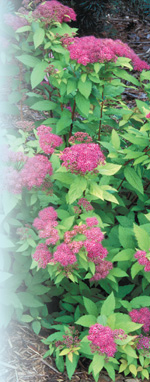
‘Goldflame’ Spirea
Photo by Robert E. Lyons
Spireas are a lovely addition to any springtime garden. They add a touch of nostalgia, yet they also look good in contemporary gardens. The classic bridal wreath spirea, with its spectacular pure white flowers that burst from tiny deciduous stems, is a favorite and a signal that spring is around the corner.
In the Rosaceae family, the 12 Spiraea species offer a number of varieties and crosses with interesting foliage, flowering habit and color. Most prefer full sun to light shade with regular to moderate watering. They grow across the U.S. with adaptable species able to survive climatic zones 3 to 8.
Spireas tolerate many soils except those that are extremely wet. They may be prone to summer heat and drought damage, especially if they receive too much sun or if they are on light, sandy soils found in coastal areas. Mulching and tending to their critical watering needs in the summer will ensure their survival. Fall is the best time to plant but they may be planted in the spring as well. They generally hold up well to insect and disease pests. There may be occasional problems with aphids and some caterpillars.
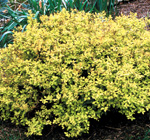
‘Gold Mound’ Spirea
Photo by Robert E. Lyons
This plant grows quickly. Prune the spring-blooming types after they flower and the summer-blooming ones in winter or early spring. Thin out old and weak canes to the ground. Remove faded, mature flowers on summer-blooming spireas to rejuvenate with a second flush of flowers.
Among the many varieties to plant are the dainty ‘Little Princess’ with light pink flowers; the larger repeat-blooming ‘Anthony Waterer’; and ‘Goldflame’ with tiny red leaves that turn golden yellow in the fall and bloom with tiny pink flowers in the spring.
In addition to ‘Little Princess’, the JC Raulston Arboretum (JCRA) in Raleigh has 14 other cultivars of Spiraea japonica alone. Talk about incredible variety in one place! See these and many other spireas at the JCRA, with many nocated in the eastern section. Visit jcra.ncsu.edu to learn more.
David Barkley