


Kousa Dogwood Prolongs Spring’s Beauty
go.ncsu.edu/readext?236437
en Español / em Português
El inglés es el idioma de control de esta página. En la medida en que haya algún conflicto entre la traducción al inglés y la traducción, el inglés prevalece.
Al hacer clic en el enlace de traducción se activa un servicio de traducción gratuito para convertir la página al español. Al igual que con cualquier traducción por Internet, la conversión no es sensible al contexto y puede que no traduzca el texto en su significado original. NC State Extension no garantiza la exactitud del texto traducido. Por favor, tenga en cuenta que algunas aplicaciones y/o servicios pueden no funcionar como se espera cuando se traducen.
Português
Inglês é o idioma de controle desta página. Na medida que haja algum conflito entre o texto original em Inglês e a tradução, o Inglês prevalece.
Ao clicar no link de tradução, um serviço gratuito de tradução será ativado para converter a página para o Português. Como em qualquer tradução pela internet, a conversão não é sensivel ao contexto e pode não ocorrer a tradução para o significado orginal. O serviço de Extensão da Carolina do Norte (NC State Extension) não garante a exatidão do texto traduzido. Por favor, observe que algumas funções ou serviços podem não funcionar como esperado após a tradução.
English
English is the controlling language of this page. To the extent there is any conflict between the English text and the translation, English controls.
Clicking on the translation link activates a free translation service to convert the page to Spanish. As with any Internet translation, the conversion is not context-sensitive and may not translate the text to its original meaning. NC State Extension does not guarantee the accuracy of the translated text. Please note that some applications and/or services may not function as expected when translated.
Collapse ▲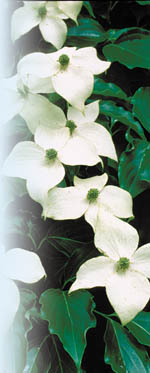
Cornus kousa
Photo by Robert E. Lyons
Few plants herald spring like the common flowering dogwood, Cornus florida, but the plant that prolongs spring’s beauty is another dogwood, Cornus kousa. Bursting into bloom two to three weeks after the common dogwood, kousa is a stunning tree with its creamy white flowers and green foliage. The pointed or tapered white petals are actually modified leaves called bracts. They surround clusters of tiny yellow flowers and cover the tree for a striking spring display.
Kousa dogwood is in demand for its grower friendliness and is an excellent substitute for the common flowering dogwood, particularly since it is resistant to the dogwood borer and dogwood anthracnose problems that have plagued the common dogwoods in recent years.
This handsome small tree adds year-round beauty and is particularly attractive in smaller spaces and urban gardens. The bark is initially smooth and light brown, later exfoliating into small patches forming a tan and brown camouflage or mottled pattern. This mottled, exfoliating bark creates interest in wintertime. After bloom in mid-May, jousa’s red raspberry-kike fruit appears during late summer and hangs down among the green leaves. The edible fruit persists into autumn complementing the purplish-red fall foliage. The fruit is sweet and edible but somewhat mealy.
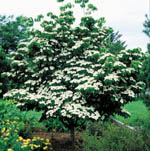
Cornus kousa
Photo by Robert E. Lyons
Kousa grows best in partial shade and will tolerate full sun, growing to 15 to 25 feet with a 25-foot spread. It grows in climatic zones 5 to 8 and prefers being planted in a well-drained acidic soil.
The beloved kousa dogwood will stretch your imagination when you visit the collection of cultivars at the JC Raulston Arboretum (JCRA) at NC State University. From the weeping forms of ‘Pendula” and ‘Lustgarten Weeping’, to the slightly rosy floral display of ‘Satomi’ and the subtle fall color interest of ‘Autumn Rose’, you will find that kousa dogwood takes a back seat to nobody! To learn more visit the JCRA website at jcra.ncsu.edu.
David Barkley