


New Sweet Potatoes Add Ornamental Flavor
go.ncsu.edu/readext?236443
en Español / em Português
El inglés es el idioma de control de esta página. En la medida en que haya algún conflicto entre la traducción al inglés y la traducción, el inglés prevalece.
Al hacer clic en el enlace de traducción se activa un servicio de traducción gratuito para convertir la página al español. Al igual que con cualquier traducción por Internet, la conversión no es sensible al contexto y puede que no traduzca el texto en su significado original. NC State Extension no garantiza la exactitud del texto traducido. Por favor, tenga en cuenta que algunas aplicaciones y/o servicios pueden no funcionar como se espera cuando se traducen.
Português
Inglês é o idioma de controle desta página. Na medida que haja algum conflito entre o texto original em Inglês e a tradução, o Inglês prevalece.
Ao clicar no link de tradução, um serviço gratuito de tradução será ativado para converter a página para o Português. Como em qualquer tradução pela internet, a conversão não é sensivel ao contexto e pode não ocorrer a tradução para o significado orginal. O serviço de Extensão da Carolina do Norte (NC State Extension) não garante a exatidão do texto traduzido. Por favor, observe que algumas funções ou serviços podem não funcionar como esperado após a tradução.
English
English is the controlling language of this page. To the extent there is any conflict between the English text and the translation, English controls.
Clicking on the translation link activates a free translation service to convert the page to Spanish. As with any Internet translation, the conversion is not context-sensitive and may not translate the text to its original meaning. NC State Extension does not guarantee the accuracy of the translated text. Please note that some applications and/or services may not function as expected when translated.
Collapse ▲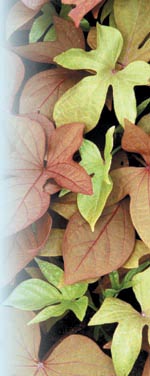
‘Sweet Caroline Bronze’
The sweet potato, Ipomoea batatas, a tropical root and member of the morning glory family, has taken the landscape industry by storm. Adding another dimension to a plant traditionally associated with a food we welcome on North Carolina tables, the ornamental sweet potato is popular for its decorative foliage and vigorous growth habit which provide an appealing plant choice for mixed containers or as a groundcover.
Like so many plants from tropical regions, sweet potatoes like it hot. They need full sun and constant moisture. Plant after danger of frost has passed and watch them take off when the soil temperature begins to warm.
Look for three main cultivars: ‘Blackie’, with purple, almost black, foliage and deeply cut leaves; ‘Marguerite’ (‘Sulfur’) with its chartreuse lime-green foliage, and ‘Tricolor’ (‘Pink Frost’) with shades of pink, green and white marbled in the same leaf. While they do not flower often, them enhance mixed plantings with shrubs, herbaceous perennials and flowering annuals.
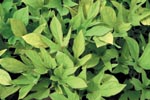
‘Sweet Caroline Light Green’
Perhaps most exciting is the 2002 release of four new patented cultivars developed by NC State University researchers in cooperation with the JC Raulston Arboretum (JCRA). The “Sweet Caroline” series names each new cultivar by its color and is characterized by a compact growth habit and reduced root size, which makes them better suited than existing cultivars to containers and landscape gardens. They offer all the colors currently available plus the uniquely hued ‘Sweet Caroline Bronze’. The latter is coppery-bronze in appearance, especially as the leaves age, and has deeper-, contrasting-colored veins in its leaves.
Gardeners should contact their favorite garden center for availability, whereas retailers should contact Bodger Botanicals for stocking information. In this first-time partnership, a portion of the “Sweet Caroline” royalties will benefit the JCRA. Learn more at jcra.ncsu.edu.
Karen Neill